

News
Throwback quotes: Just a few years ago, Dialogue Capital (DC) conducted an interview with Meridiam’s CEO and Founding Partner Thierry Deau.
Thierry Deau, CEO, Founding Partner, Meridiam: “I would say the most exciting part of the world right now, both for energy and infrastructure, is Africa.” (2016).
Mr. Deau’s words are still valid today despite the market having changed significantly since then.
The recent initiative ‘NOA Group Holdings (Pty) Ltd., a renewable energy platform that provides energy solutions for its customers’ by African Investment Managers (AIIM), is one example demonstrating that Africa is still one of the key-markets for infrastructure investors today.
This $90m transaction, which was announced on 17th November this year, is said to be financed through capital from AIIM’s South African IDEAS Fund and its AIIF4 Investment Fund.
The planned energy platform establishes AIIM as one of the leading private institutional investors in Africa’s renewable energy landscape, with projects representing over 1.9GW of solar and wind generation capacity in South Africa only. Their intention is to develop bolt-on investment prospects in other key African markets where they already have previous experience.
Click here to see the full article.
Furthermore, the European Union and African Union (AU) decision makers met up in Brussels in early December to discuss and plan details of the bloc’s $150bn Global Gateway Plan for Africa fund projects in infrastructure, energy, and food security.
For the Interview that was conducted with Thierry Deau, CEO and Founding Partner of Meridiam please click here.
Carlyle partners with Tillman Infrastructure to push Digital Infrastructure
It was announced recently this month that the Global investment firm Carlyle has committed up to $1 billion to partner with Tillman Global Holdings, a holding company that builds businesses in digital and infrastructure. Current portfolio companies operate by using tower sectors, in-building small cells and fibre assets.
By committing up to US$ 1 billion from the funds managed by its Global Infrastructure platform to partner with Tillman Global Holdings, Carlyle will help Tillman Infrastructure develop further: Tillman Global will use the funds to accelerate growth, by speeding up its investments in their infrastructure portfolio to meet the increasingly high demand for mobile internet infrastructure, and to keep investing in premium mobile infrastructure to maintain its mobile network operator and clients.
The Carlyle Group is no stranger to digital infrastructure investments – they have already committed to two other deals in the past: Carlyle acquired Involta Data Centers, a U.S. data centre firm focused on hybrid IT and cloud infrastructure, and Wyyerd Fibre Group, a regional fibre-to-home platform in the Southwestern United States for which it also completed an add-on fibre acquisition. However, this deal with Tillman Infra really shows how established digital infrastructure is becoming as an asset class, as opposed to just as an added value or bonus.
So much so that Joshua Pang, the Head of Digital infrastructure and Managing Director at the Carlyle Group, stated in Carlyle Group’s press release that: “The tower sector is one of the most stable and resilient sectors globally and has grown through the two recessions – we think it’s a premium, defensible growth industry”.
He also provided some background on how this deal strengthens their ESG strategy: “Tillman is building towers that help narrow the digital divide, by focusing on developing infrastructure in more rural and sparser or suburban markets where communities have been underinvested and underserved”.
Some of our Partners we have been working together include:
Absolut Research
Inflation und Energiepreise verändern Immobilieninvestments - Absolut Research (absolut-research.de)
Egis
Partnership for cooperation on SMARTCITY and the Clean Transport Zone for Poland (egis-group.com)
Launch of Public Private Partnership (PPP) for road toll plazas in Cameroon (egis-group.com)
Fibree
Put Your Money Where Your Impact Is (fibree.org)
The Real Estate and Crypto Assets Podcast is Here (fibree.org)
Geo Connexion:
Finding the optimum locations for EV charging stations | GeoConnexion
LTIIA:
LBP AM launches First infrastructure debt impact fund in Europe – LTIIA
Portfolio Institutionell:
Versorgungswerke-Gruppe sucht Führungskraft - portfolio institutionell (portfolio-institutionell.de)
Die Gefahr strandender Immobilien ist real - portfolio institutionell (portfolio-institutionell.de)
Renewables Now:
First Solar gets 2.4-GW PV module supply order from Intersect Power (renewablesnow.com)
Octopus, GLIL buying 12.5% in UK's Hornsea One complex (renewablesnow.com)
Tank Storage Magazine:
Alkion Marseille branches into isotanks - Tank Storage Magazine
TSA issues new US pipeline cybersecurity requirements - Tank Storage Magazine
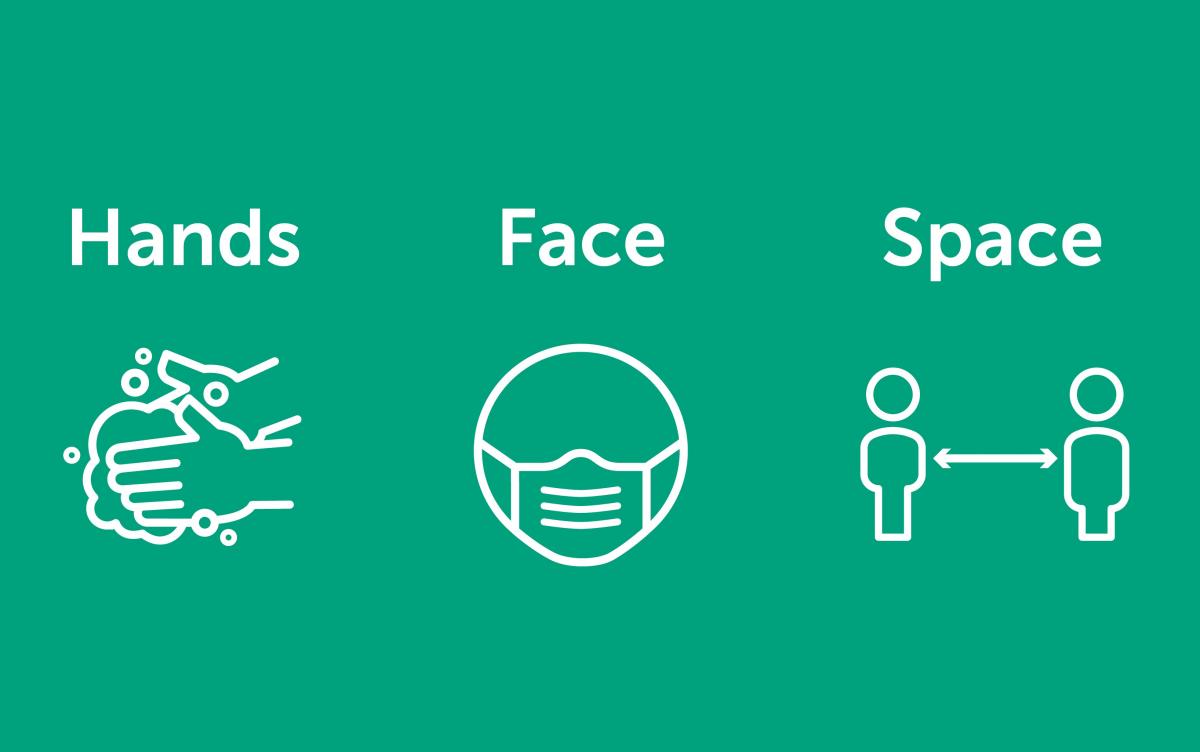
LET'S STAY SAFE TOGETHER
Information on accommodation and the entry into Frankfurt, Hesse, Germany
This page is being updated on a monthly basis to reflect the most recent changes to keep us safe and allow a smooth event.
Dialogue Capital’s COVID-19 prevention measures will allow you to participate safely at the GID/GRED 2021 in Frankfurt. For your own protection and that of all other participants, we kindly request that you comply with the following regulations:
-In order to fly into Germany: please ensure you got your vaccination pass either as a print-out or available on your mobile ready to be checked by the airlines (they will provide you will all information they will need for your region upon check-in) as well as the passenger locator form for Germany (easy to complete) - please find the link to the locator form here online: Please click here.
Please find here the local guidelines for events in Frankfurt:
DC (Dialogue Capital):
Can you tell me briefly what areas/sectors in infrastructure are on top of your agenda right now?
Reynold Martin, Managing Principal, Allstate Investments:
We are open to most sectors in the infrastructure space. Our focus is on relative value. We do have some internal challenges related to lower returning strategies, but assuming we can find the right transactions that meet our needs, we remain open to the broader infrastructure space.
Additionally, we do consider our own portfolio construction when looking at deals. As an example, assuming we have a comfortable level of exposure to a sector, in addition to relative value, we would consider what is attractive about this transaction to add onto our portfolio exposure.
Finally, as an US$ investor, we think about net returns in US$. In many cases this can be done by evaluating the transaction return as well as any needed hedging activity to determine true relative value. This is easier with directs than with funds, but we regularly ask potential fund partners to analyse what their returns would have been to help with our analysis.
DC: How do you rate the investment climate in the regions you are active in?
Reynold Martin:
Our mandate focuses on OECD nations. Within the most active of these regions, healthy competition seems to be present. Where there is limited deal flow, there may be the ability to find one off transactions, however, we still need to consider things like currency impact and liquidity within the market.
There appears to be a significant amount of capital seeking to invest within the market. This can impact a few things, including our relative positioning within the market, competition for deal flow and/or strategy drift. These are all considerations that we take when analysing direct investments and fund investments.
DC: What’s your outlook for infrastructure for the next 3-6 months?
Reynold Martin:
3-6 months is an awfully short time to develop an outlook for infrastructure. If I had to give some synopsis, it would be that the appetite for investing in the sector continues to grow and there is concern that deal activity will keep pace. Additionally, regulatory risk seems to be increasing, which adds additional uncertainty to the market.
The 4th international Infrastructure Dialogue 2018 will bring together international decision makers in infrastructure. Senior industry experts, including investors, lenders, developers and policy makers will be discussing the latest global trends in infrastructure. Participants will discuss developments in debt capital markets and other ways to finance infrastructure projects.

Der 4. Internationale Infrastructure Dialogue 2018 bringt am 19. und 20. Juni die leitenden Entscheidungsträger der Infrastrukturbranche zusammen.
Interview with Thierry Deau, Founding Partner, CEO, Meridiam
Dialogue Capital (DC):
Can you please tell us what regions you focus on and what sectors are on top of your list right now?
Mr. Deau:
Meridiam is active in OECD countries, primarily in Europe and North America. We have also been covering Africa since the launch of our Africa-focused fund. And we are very happy to partner with a growing number of African governments to address the infrastructure investment gap in the region. Whether it is a solar farm in Senegal or a university campus in Ivory Coast, we are currently contributing to a number of key regional initiatives and projects which fit our investment philosophy. We also feel that several MENA countries, in spite of the Syrian crisis, are on the verge of seeing a great number of quality infrastructure projects emerge. Through our European fund, we are particularly active in Turkey, which remains one of the most active markets globally.
Interview with Ian Hawkesworth, Head of Public-Private Partnerships & Capital Budgeting, OECD, 1st May, 2015
1) How can the public sector attract more PPP?
The public sector should make projects available for investors that play to the private side's strengths. This requires that the public side builds the ability to identify, price and allocate the key project risks to the right party at the right price. The impetus for transferring risk is easy to understand, but the cost for doing so is perhaps less well understood. Better projects in terms of value for money will probably mean more risk retention on the public side. In addition, projects need to make sense from a socioeconomic point of view to ensure the basic case for the investment. Finally, a serious commitment to the PPP model is necessary.